

The Physics Unit is responsible for the development and teaching of physics courses across all engineering departments at the college. These include the core physics courses studied in the engineering departments, as well as several elective courses. The faculty views the foundational physics courses (as well as the mathematics courses) as the scientific infrastructure upon which engineering studies are built, and as a key means of developing analytical skills, physical intuition, and rigorous reasoning that underlie engineering thinking. Based on this perspective, the instructional goals of the physics courses are defined as follows:
- Teaching the subject matter at a level consistent with accepted university standards
- Emphasizing the physical principles underlying the material studied
- Developing proficiency in the use of mathematical tools
- Cultivating the ability to model unfamiliar problems
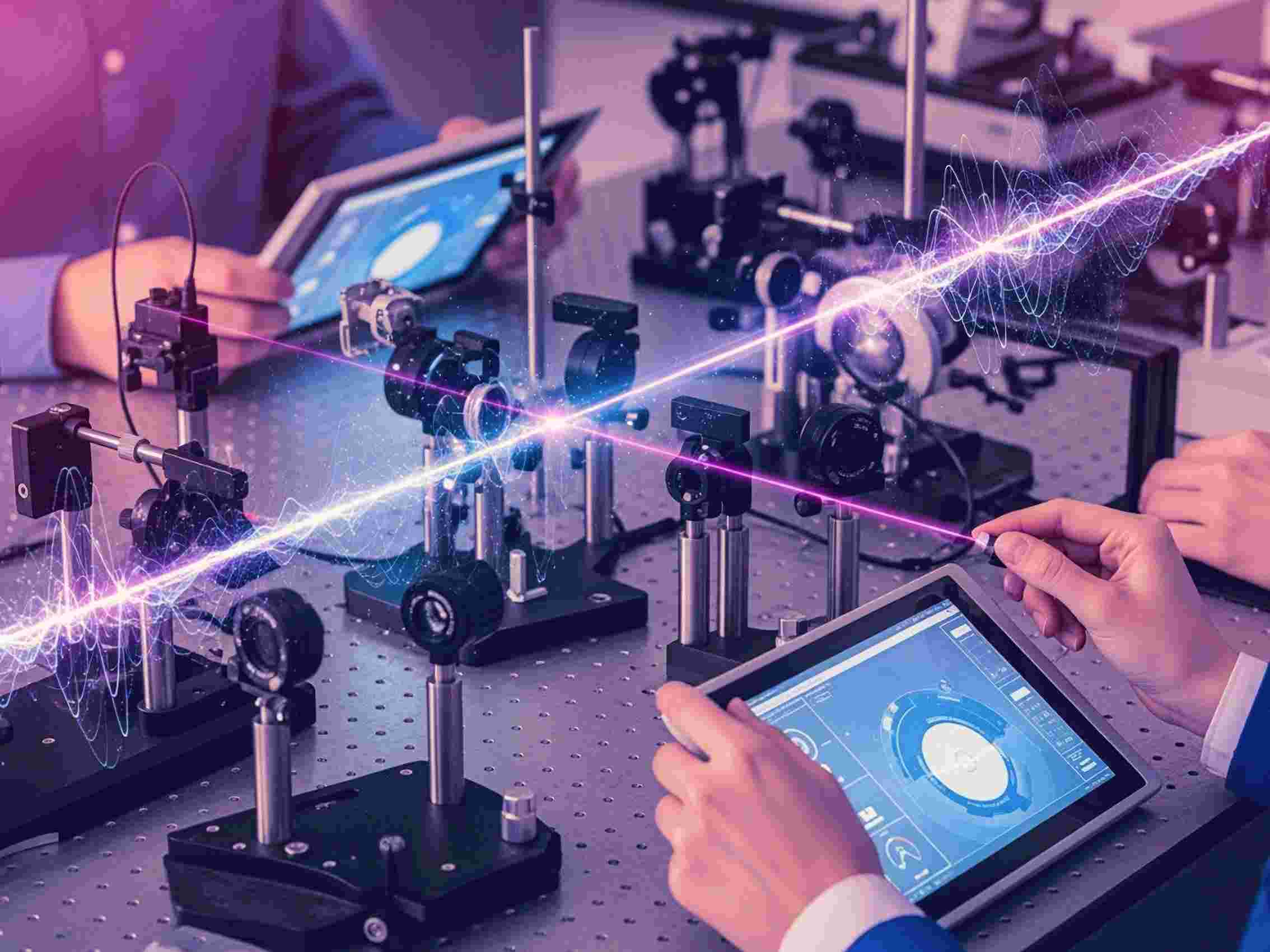
- Acquiring experimental laboratory skills
Recognizing the importance of physics as a foundational discipline, the college invests resources in providing students with the tools and skills necessary to engage with diverse fields of knowledge. Physics courses are taught in accordance with the needs of the departments at an advanced or standard level, with broader or narrower scope while emphasizing the development of analytical and critical thinking skills.
The importance of physics studies stems from the view that every engineer must be familiar with the laws of nature relevant to their field of practice. Nevertheless, the courses do not focus solely on familiarity with physical phenomena or laws, but rather emphasize the scientific mode of thinking. This mode of thinking enables the integration of observations and the development of new ideas. Even in fields that do not appear to deal directly with the natural sciences, knowledge of physics plays an important role in effective communication among engineers.
All academic programs at the college include mandatory physics courses. Beyond introductory courses, most required physics courses include laboratory components that are integrally incorporated into the curriculum. In addition to the mandatory courses, the unit offers several elective courses tailored to the unique characteristics of the departments, such as Quantum Computing for students in Software Engineering, and courses in Optics and Electro-Optics for Electrical Engineering students, among others.
The lecturers, teaching assistants, and laboratory instructors have extensive teaching experience. A significant number of them are invited to teach, including advanced-level courses, at various universities. Both lecturers and teaching assistants hold doctoral degrees.
Several faculty members of the unit are also actively engaged in research. Their publications appear in leading international scientific journals, and they serve as referees and guest editors for academic journals while receiving competitive research grants. The main research areas include optics; light-matter interaction and nanophotonics; optical biosensing; superconductivity; astrophysics; and physics education.
Some members of the staff have prepared and accompanied Israel’s national teams for the International Physics Olympiads. Over the years, these teams have won numerous medals, including gold medals.
The unit’s staff is aware that physics studies at the Braude College of Engineering in Karmiel are challenging. To help students overcome these difficulties, the staff actively promotes and facilitates interaction between students and instructors. This policy begins in the lectures themselves, where questions and discussions are encouraged, continues through assistance during office hours, and is further implemented through college-wide physics workshops held outside regular class hours. In these workshops, students work together to solve problems, while faculty members assist in conceptual understanding and homework problem solving, all within a supportive and collegial atmosphere.